Do Clear Aligners Hurt?
Pain & Comfort Guide
Specialist Aligner Dentists. Latest in Digital Dental Technology. Straight answers on pressure, tenderness, and what's normal — from the team treating Lahore patients for over a decade.
Somewhere between deciding to get clear aligners and putting your first tray in, one question comes up for almost every patient: is this going to hurt? The honest answer is that most people feel something — but that something is usually pressure and tightness, not pain in the way a toothache or an injury feels. This guide covers exactly what to expect, week to week, so nothing catches you off guard.
See also: Invisible Clear Aligners Lahore | Aligners or Braces? A Decision Framework
Understanding Why There Is Discomfort
Aligners work by applying gentle, continuous pressure that encourages your teeth to move a small amount at a time. That pressure isn't a side effect of treatment going wrong — it's the treatment working exactly as designed.
The same biological process that makes braces effective is at work here, just applied in smaller, more controlled steps with each new tray.
What's Actually Happening Underneath the Discomfort
- The ligament holding each tooth in place stretches on one side and compresses on the other as the tooth shifts
- Your jawbone gradually remodels itself around the tooth's new position
- Gum tissue adapts to the edges and pressure points of each new tray
- Your bite adjusts slightly as teeth move into closer alignment with each other
What Does It Feel Like?
The word patients reach for most often isn't "pain" — it's "pressure" or "tightness." Sharp, stabbing, or throbbing pain is not typical and is worth flagging separately with your orthodontist.
A dull, steady sensation across several teeth at once, most noticeable right after inserting a new tray. It tends to fade within a couple of hours and settle further over the following day.
Teeth that are actively moving can feel sensitive when you bite into firmer foods, particularly in the first day or two of a new tray.
The plastic edge of a new tray can rub against the inside of your cheeks, lips, or tongue until the tissue adjusts — usually resolving within a few days.
A slight change in speech, especially with "s" sounds, is common for the first day or two as your tongue adjusts to the added thickness against your teeth.
How Long Does the Discomfort Last?
Discomfort follows a predictable pattern with every new tray — it does not build up or get worse as treatment progresses.
| Timeframe | What's Happening | What to Expect |
|---|---|---|
| Day 1 – 2 | Peak pressure period | Tightness and tenderness are strongest right after a new tray goes in |
| Day 3 – 4 | Noticeable improvement | Biting sensitivity eases; tray-edge soreness on cheeks or tongue settles down |
| Day 5 onward | Back to normal | Fully comfortable again, typically before it's time to switch to the next tray |
Quick tip: Switching trays right before bed means the peak discomfort largely happens while you're asleep, so the first day feels far less noticeable.
Comparing Aligner Discomfort to Braces Pain
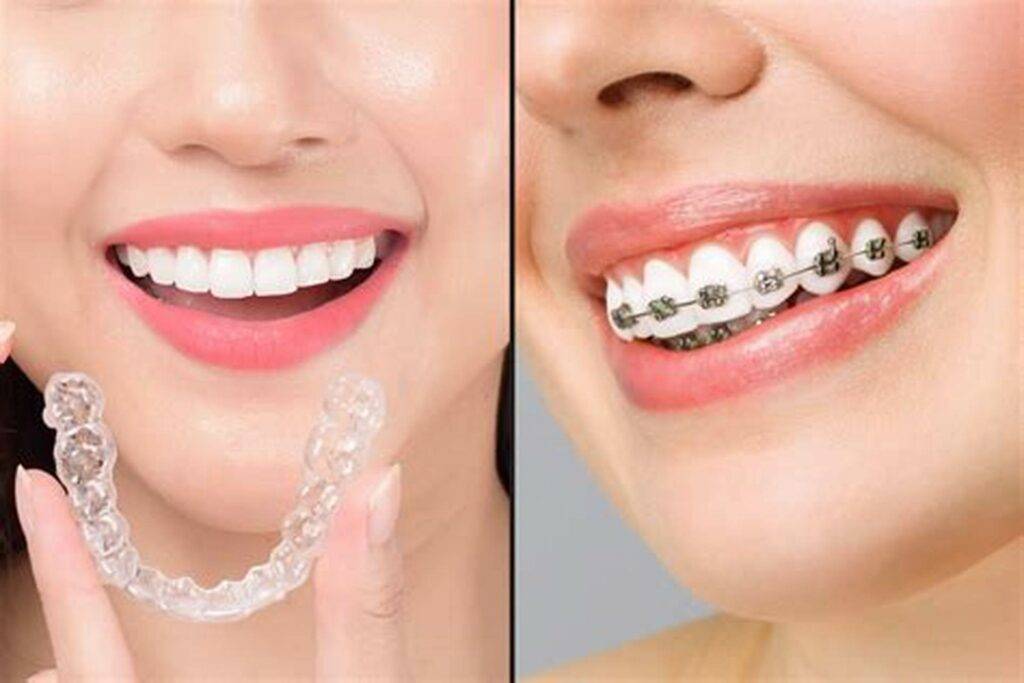
Both aligners and braces move teeth using pressure, so some discomfort is expected with either option — but the pattern and intensity differ quite a bit.
Discomfort is brief and predictable, appearing for a day or two with each new tray. There are no sharp components, so soreness is limited to pressure and occasional tray-edge rubbing — both of which fade as you adjust.
Discomfort tends to be more intense right after placement and after each in-office tightening. Brackets and wire ends can irritate soft tissue directly, often requiring orthodontic wax for relief between visits.
Tips to Manage Discomfort
Most discomfort responds well to a few simple habits — you rarely need to do anything beyond this.
Simple Habits That Help
- Switch to a new tray at night, so the peak pressure passes while you sleep
- Bite gently on a chewie after inserting a new tray to help it seat fully
- Rinse with cool or lukewarm water to ease tenderness and soothe irritated gums
- Apply orthodontic wax over any tray edge that's rubbing your cheek or tongue
- Stick to softer foods for the first day or two of a new tray
- Use a standard over-the-counter pain reliever, as directed on the packaging, if needed
When to Contact Your Orthodontist
Mild pressure and tenderness are expected. A few signs, however, point to something that needs a professional look rather than home management.
Reach Out If You Notice
- Sharp or throbbing pain, rather than general pressure or tenderness
- Discomfort that doesn't ease up after 4 to 5 days with a tray
- A tray that won't seat fully or feels like it doesn't fit properly
- Swelling, bleeding gums, or visible sores that aren't improving
- Pain isolated to one specific tooth rather than spread across several
When to call: Persistent or one-sided pain, a tray that won't seat, or gum swelling that isn't settling down are worth getting checked rather than waiting out. Dental Avenue's emergency line handles these same-day, 9 AM to 9 PM.
The Bigger Picture
A little pressure and tenderness with each new tray is one of the clearest signs that your treatment is progressing the way it's supposed to. It's temporary, predictable, and almost always far milder than most people expect going in.
The goal isn't to push through discomfort alone — it's to know what's normal, manage it with a few simple habits, and know exactly when to ask for help.
Comfort Support, Every Step of Treatment
Every patient's tolerance is a little different, and a treatment plan should account for that — not just hand over a stack of trays and a start date.
Hands-On Guidance From Day One
Every patient is walked through exactly what to expect with their first tray, including how discomfort typically feels and how long it usually lasts.
Real Answers Between Visits
If a tray feels off or discomfort seems more than usual, you can reach our team directly on WhatsApp or by phone rather than waiting for your next check-in.
Adjustments When Needed
If a tray isn't fitting or seating the way it should, we assess and adjust your plan quickly so comfort and timeline both stay on track.
10+ Years Treating Lahore Patients
A decade of experience guiding patients across DHA, Cantt, and Johar Town through every stage of aligner treatment, including the parts that feel uncertain at first.
If you're already in treatment and something feels different from what you expected, it's always faster to ask us directly than to wait it out. Dental Avenue's Aligner Specialists and Orthodontists offer ongoing support throughout your treatment, so discomfort gets addressed before it becomes a bigger concern.
Discomfort at a Glance
| Factor | Clear Aligners | Braces |
|---|---|---|
| Type of discomfort | Pressure, tightness, mild tenderness | Pressure plus soreness from wires and brackets |
| When it peaks | First 1–2 days of a new tray | Right after placement and each tightening |
| Soft tissue irritation | Occasional, from tray edges | More frequent, from brackets and wire ends |
| Ability to pause | Trays can be removed to eat or for a short break | Fixed in place with no way to remove |
| Typical duration | Resolves within 4–5 days per tray | Resolves within a few days per adjustment |
| Relief options | Chewies, wax, cool rinse, OTC pain reliever | Orthodontic wax, OTC pain reliever |
Frequently Asked Questions
Is it normal for a new tray to hurt every time I switch?
Yes. Most patients feel pressure and mild tenderness for the first day or two of every new tray — that's the expected pattern throughout treatment, not a sign of a problem.
Do aligners hurt more than braces?
Most patients find aligners milder overall. Braces tend to cause more noticeable soreness right after each in-office tightening, while aligners spread smaller movements across each tray change.
Can I take a break from wearing my aligners if they hurt?
Aligners need 20 to 22 hours of wear a day to keep treatment on schedule, so it's better to manage discomfort with wax, a chewie, or a pain reliever than to leave them out for long stretches.
How do I know if pain is normal or a sign of a problem?
General pressure spread across several teeth that eases within a few days is normal. Sharp pain, pain in one specific tooth, or discomfort that doesn't improve after 4 to 5 days is worth having checked.
Will discomfort get worse as treatment goes on?
No — most patients find each new tray feels similar to the last, rather than progressively worse, since every tray moves teeth by a small, controlled amount.
Related Articles
How to Clean Clear Aligners? The Ultimate Daily Care Guide
Aligners or Braces? A Decision Framework for Every Case Type
Invisible Clear Aligners in Pakistan — Dental Avenue Lahore
Clear Aligners for Crowded Teeth: Everything You Need to Know
Dental Avenue & Facial Aesthetics
Opposite Askari X, Near DHA Lahore Cantt
0325 044 5558 | dentalavenuehospital@gmail.com
Copyright © 2026 Dental Avenue & Facial Aesthetics