Clear Aligners for Adults: Why It Is Never Too Late for a Great Smile
Specialist Aligner Dentists. Latest in Digital Dental Technology. A complete guide for adults considering treatment, from the team treating Lahore patients for over a decade.
"Am I too old for this?" is one of the most common questions adult patients ask before their first consultation. It's an understandable worry, but it's rarely a real obstacle — as long as your gums and bone are healthy, adult teeth respond to aligner treatment just as reliably as younger ones. What follows is a complete look at why adults choose aligners, what's genuinely different about adult cases, and what daily life with trays actually looks like once treatment begins.
See also: How Long Does Aligner Treatment Take? | Do Clear Aligners Hurt? Pain & Comfort Guide | Invisible Clear Aligners in Pakistan
Why Adults Are Choosing Clear Aligners
Orthodontic treatment used to be seen as something you finished as a teenager or not at all. That's changed. More adults than ever are walking into consultations for the same reason: aligners let them fix long-standing concerns about their smile without the appearance, discomfort, or disruption that used to come with metal braces. For many, discovering clear aligner treatment is available at all is what finally makes treatment feel realistic.
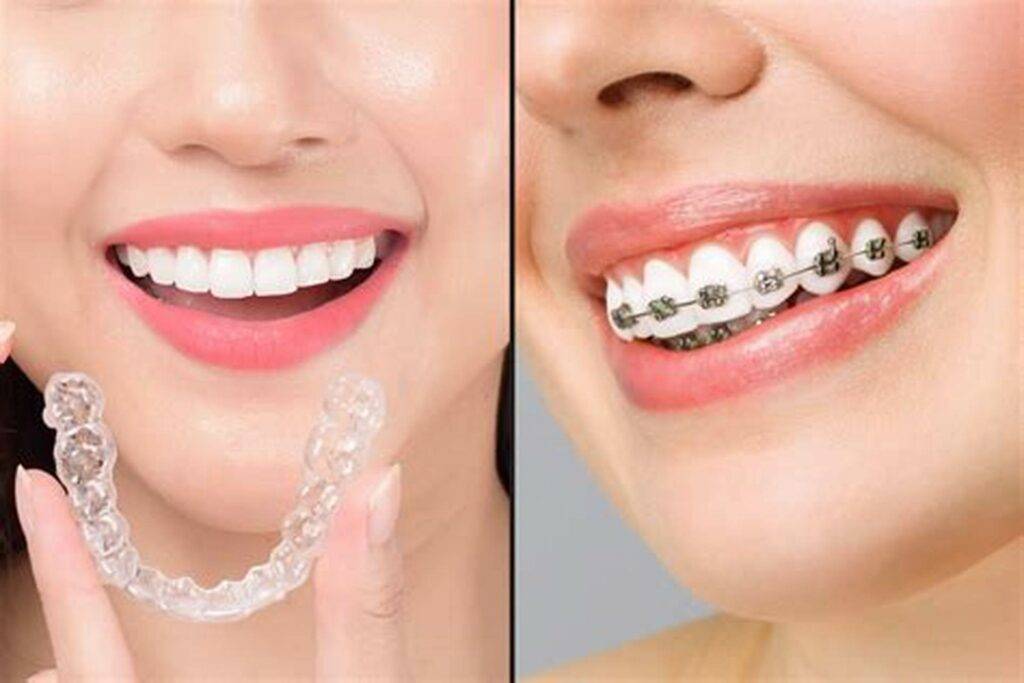
Clear trays are hard to notice in conversation, meetings, or photos — a major factor for adults who didn't want visible metal brackets as working professionals.
Fewer in-person adjustments are needed compared to traditional braces, and trays are simply swapped at home on schedule, which suits patients juggling work and family life.
Aligners come out to eat, drink, and clean your teeth, so there's no need to change how you eat or give up foods you enjoy during treatment.
Modern scanning technology maps out the entire course of treatment in advance, so adults can see a rough picture of the end result before committing to start.
Common Reasons Adults Seek Treatment
Adult patients rarely arrive for just one reason. Most are dealing with some combination of appearance, comfort, and long-term dental health, often built up over many years.
What We Hear Most Often in Consultations
- Teeth that have gradually shifted or become more crowded with age, even without any obvious cause
- Relapse after braces worn as a teenager, usually from years of not wearing a retainer
- Crowding or spacing that was never treated in childhood and has simply been lived with since
- Gaps between teeth that have slowly widened over time
- Wanting a straighter smile ahead of a wedding, a new job, or another milestone event
- Bite issues that are starting to cause uneven wear, jaw discomfort, or difficulty cleaning certain teeth properly
- General self-consciousness about a smile that's held someone back in photos or in professional settings
Special Considerations for Adult Patients
Adult teeth and gums aren't identical to a teenager's, and a good treatment plan accounts for that from the very first scan rather than treating every case the same way.
Adult bone remodels a little more gradually than a teenager's, so tooth movement can progress at a steadier pace — a factor already built into realistic adult timelines from the start.
Crowns, bridges, fillings, or missing teeth are common by adulthood, and each needs to be factored into the digital treatment plan so aligners fit and move teeth correctly around them. Where restorations like crowns and bridges are already in place, they're mapped into the scan from day one.
Adults are more likely to have some history of gum sensitivity or periodontal treatment, which is why a full gum health check — including screening for bleeding gums or gum disease — comes before any aligner plan is finalised. General guidance on gum disease is also available from the American Academy of Periodontology.
Patients returning after braces years ago often need a different, more targeted plan than a first-time patient, along with a firmer emphasis on retention afterward.
Worth knowing: None of these considerations rule adults out of treatment — they simply shape how the plan is built. For patients with more involved bite concerns, an assessment may also point toward braces and orthodontics, including options like white ceramic braces or lingual braces, as part of the conversation.
Life During Aligner Treatment as an Adult
Most adult patients are surprised by how little treatment actually interrupts their routine once the first week or two of adjustment is over.
What Adult Patients Typically Manage Day to Day
- Removing trays for meals, then brushing before putting them back in to avoid trapping food or bacteria against the teeth
- Carrying a small case and travel toothbrush for work lunches, dinners out, and social occasions
- A short adjustment period with each new tray, sometimes with a mild lisp for a day or two before speech settles
- Keeping trays in during meetings, presentations, and video calls, since they're difficult for others to notice
- Following a consistent daily aligner care routine to keep both trays and teeth clean throughout treatment
- Building wear time around a work schedule, aiming for the full 20 to 22 hours a day recommended for steady progress
For a closer look at what the first few days with each new tray typically feel like, our guide on whether aligners hurt covers the comfort side in more detail.
Age Is Not a Barrier
There's no upper age limit written into aligner treatment. What actually determines candidacy is the health of your gums and supporting bone, not the number of candles on your last birthday cake. Adults in their 30s, 40s, 50s, and beyond complete treatment successfully every year, provided the fundamentals of oral health are in place.
What matters more than age is starting from an accurate picture of your mouth. A full scan and assessment will flag anything — gum health, bone levels, existing dental work — that needs attention before or during treatment, so the plan is built around your actual mouth rather than assumptions about what "adult treatment" should look like. For general background on orthodontic care across age groups, the American Association of Orthodontists is a useful independent resource.
Start Your Adult Aligner Journey at Aligno
Your smile doesn't have an expiry date, and neither does the option to straighten it. A proper assessment is the only way to know what your own treatment would actually involve — not a generic guide.
A Plan Built From Your Scans
Every adult patient's plan is mapped from a full digital scan and assessment, accounting for existing dental work, gum health, and bite — not a one-size-fits-all template.
Discretion That Fits Your Life
Trays are designed to be worn through meetings, meals, and daily life without drawing attention, so treatment stays your business, not everyone else's.
Straight Talk on What's Realistic
If aligners are the right fit for your case, we'll say so. If something else — like braces or a phased approach — makes more sense, we'll tell you that too.
10+ Years Treating Lahore Patients
A decade of experience treating adult patients across DHA, Cantt, and Johar Town, from first-time treatment to correcting relapse after old braces.
Whatever stage of life you're at, the only way to know what your treatment would look like is a proper assessment — not a generic guide. Dental Avenue's Aligner Specialists and Orthodontists can map out a realistic plan for your smile from your very first visit.
Adult Concerns at a Glance
| Common Adult Concern | How Aligners Typically Help | Extra Consideration |
|---|---|---|
| Relapse after teenage braces | Re-align shifted teeth with a fresh, targeted plan | Stronger emphasis on long-term retention |
| Crowding never treated in childhood | Gradual, comfortable straightening at any age | Assessed alongside overall gum and bone health |
| Gaps that widened over time | Trays close spacing in a controlled, staged way | Timeline depends on how many teeth are involved |
| Crowns, bridges, or missing teeth | Plan is digitally mapped around existing dental work | May need coordination with restorative dentistry |
| Mild bite or jaw discomfort | Aligners can address certain bite-related misalignment | More complex bite cases may need a combined approach |
Frequently Asked Questions
Is there an age limit for clear aligner treatment?
No fixed upper limit. What matters most is the health of your gums and supporting bone, which is checked during your assessment — not your age itself.
Will aligners work if I had braces as a teenager and my teeth have shifted back?
Often, yes. This is one of the most common reasons adults return for treatment, and a fresh plan can be built specifically to correct that relapse, along with a firmer retention routine afterward.
Do I need to change my diet during treatment?
No. Aligners are removed before eating and drinking anything other than water, so there's no list of foods to avoid the way there is with fixed braces.
Can I wear aligners if I have crowns, fillings, or a missing tooth?
In most cases, yes. These are accounted for during the digital scan and treatment planning stage, so the plan works around your existing dental work rather than ignoring it.
Will people be able to tell I'm wearing aligners at work?
Unlikely at a normal conversational distance. Clear trays are one of the main reasons adults choose this option over visible braces for professional settings.
Related Reading
Invisible Clear Aligners in Pakistan
How Long Does Aligner Treatment Take?
Do Clear Aligners Hurt? Pain & Comfort Guide
How to Clean Clear Aligners
Braces & Orthodontics at Dental Avenue
White Ceramic Braces for Teeth
Digital Smile Design in Lahore
Visit the Dental Avenue Blog
Dental Avenue & Facial Aesthetics
Opposite Askari X, Near DHA Lahore Cantt
0325 044 5558 | dentalavenuehospital@gmail.com
Home | About Us | Blog | Contact Us | Meet Our Team
Copyright © 2026 Dental Avenue & Facial Aesthetics