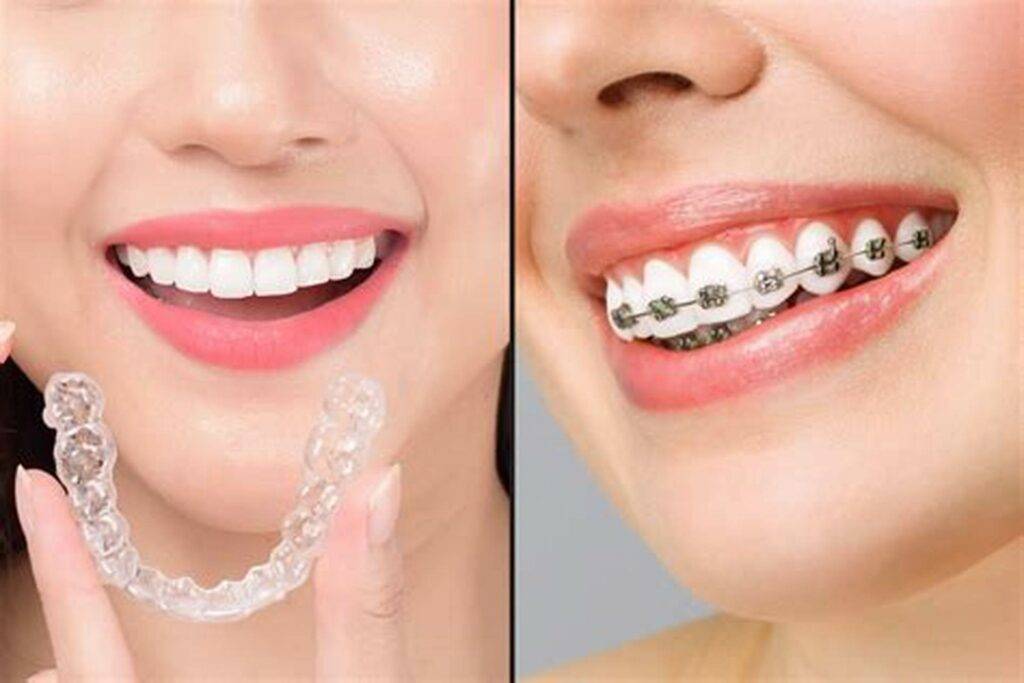
Clear Aligners Before & After:
Real Transformations
Specialist Aligner Dentists. Latest in Digital Dental Technology. Real patient results, what actually shapes them, and how to get the transformation you're hoping for — from the team treating Lahore patients for over a decade.
Before-and-after photos are usually the first thing people search for once they're seriously considering clear aligners — and for good reason. Renderings and marketing promises only go so far; seeing what actually changed in someone else's smile tells you far more about what's realistic. According to the American Association of Orthodontists, aligners work by sequentially applying gentle pressure to move teeth a fraction of a millimetre at a time — which is exactly why real transformations unfold gradually, tray by tray. This guide walks through real transformation types, what genuinely drives results, and how to read a simulation versus a finished case.
See also: Do Clear Aligners Hurt? Pain & Comfort Guide | Clear Aligners vs Braces: Which Is Right for You?
Clear Aligners Before and After: What Real Transformations Look Like
Every transformation looks a little different because every starting smile is different — but real before-and-after cases share a few things in common. Change happens gradually across a series of trays, teeth settle into positions that work with the bite rather than against it, and the result tends to look natural rather than dramatically altered.
The case below shows a full smile transformation: crowding and uneven edges resolved into an evenly aligned, symmetrical arch, without changing the natural shape or shade of the teeth.

Types of Transformations Aligners Can Achieve
Aligners aren't limited to one kind of correction. Depending on the starting bite, they can address several different concerns, sometimes all within the same treatment plan.
Overlapping or twisted teeth are gradually guided into a straight, evenly spaced row, often the most visually dramatic type of change.
Trays close visible spaces between teeth by shifting them together in small, controlled increments, tray by tray.
Mild to moderate overbites, underbites, and crossbites can be improved as aligners bring upper and lower arches into better alignment with each other.
Individual teeth that are turned or angled are rotated back into their correct orientation within the arch.
The case below shows a front gap closing fully over the course of treatment — a common and highly predictable type of correction.

Factors That Influence Your Results
Two patients with similar starting smiles can end up with noticeably different results — and the difference almost always comes down to a handful of factors rather than chance.
What Actually Drives the Outcome
- Wear time — trays need 20 to 22 hours a day to move teeth on schedule; inconsistent wear stretches out treatment and can limit how far teeth actually move
- Starting complexity — mild crowding or spacing resolves faster and more predictably than severe crowding, large bite discrepancies, or rotated teeth
- Treatment planning accuracy — a plan built around a full assessment of your bite, not just your front teeth, produces a more stable, longer-lasting result
- Attachments and IPR — small tooth-coloured bumps and minor interproximal reduction, when needed, give trays the grip and space required for more complex movements
- Following the tray sequence — skipping ahead or wearing a tray longer than intended can throw off the fit of trays that follow
- Retention after treatment — how well results hold depends heavily on consistent retainer wear once active treatment ends
Understanding Digital Simulations vs Real Results
Before treatment starts, most patients see a digital simulation of their projected outcome. It's a genuinely useful planning tool — but it's a projection, not a guarantee, and it's worth understanding the difference between the two.
Built from a 3D scan of your teeth, software maps out a projected path of movement based on your current bite. It's a planning tool that assumes ideal, consistent wear and can't account for biological variables in advance.
Actual outcomes depend on wear time, how your teeth and jawbone respond to pressure, and any refinements added mid-treatment. Most patients land close to their simulation, though minor adjustments are common and normal.
Good to know: If your teeth aren't tracking exactly with the plan partway through, that's what refinement trays are for — a normal, built-in part of treatment, not a sign that something has gone wrong.
How to Maximise Your Results
Since wear time and consistency drive so much of the outcome, a few daily habits make the biggest difference between an average result and a great one.
Habits That Make the Biggest Difference
- Wear trays for the full 20 to 22 hours a day, removing them only to eat, drink, brush, and floss
- Switch trays exactly on schedule, not early and not late, unless your orthodontist advises otherwise
- Use chewies daily to help each tray seat fully against every tooth
- Keep every check-in appointment so tracking can be reviewed and refinements added early if needed
- Clean trays properly each day, since buildup can affect fit and how well they seat
- Wear retainers as instructed once active treatment ends, to protect the result you've worked for
Close, consistent attention to detail is what separates a good result from a great one — visible even at the level of individual tooth alignment and gum symmetry, as seen below.

What Happens After Your Final Tray?
Finishing your last tray is a milestone, not the finish line. What happens in the weeks and months right after has a real effect on how long your result actually lasts.
| Stage | What Happens | What to Expect |
|---|---|---|
| Final review | Your orthodontist checks the finished result against the original plan | Any small refinements are addressed before moving to retention |
| Retainer fitting | Custom retainers are fitted to hold your teeth in their new position | Usually worn full-time initially, then nights only over time |
| Long-term retention | Teeth remain naturally prone to shifting back without support | Nightly retainer wear becomes a long-term habit, not a temporary one |
Worth knowing: Teeth can drift for years after active treatment ends. Skipping retainer wear is the single most common reason a great result doesn't stay that way.
Your Before-and-After Story Starts With a Plan
Every transformation on this page started with a full assessment and a plan built around one specific bite — not a generic tray count. Yours would start the same way.
3D Digital Simulation Included
See a projected before-and-after of your own smile before committing to treatment, built from a full digital scan.
Plans Built Around Your Bite
Attachments, IPR, and tray sequencing are planned around your specific case, not applied as a one-size-fits-all template.
Tracking Reviewed at Every Visit
If teeth aren't tracking exactly with plan, refinements are identified early rather than left until the final tray.
10+ Years Treating Lahore Patients
A decade of experience delivering predictable aligner results for patients across DHA, Cantt, and Johar Town.
Transformations at a Glance
| Concern | What Aligners Typically Achieve | What Helps Results Hold |
|---|---|---|
| Crowding | Even spacing and alignment across the arch | Full tray sequence plus consistent retainer wear |
| Gaps & spacing | Closed or significantly reduced gaps | Retainers, since gap-prone teeth can relapse without support |
| Bite issues | Improved overbite, underbite, or crossbite alignment | Attachments and precise tray tracking throughout |
| Rotated teeth | Teeth turned back to their correct orientation | IPR or attachments where needed, plus full wear time |
| Overall result | A natural-looking, evenly aligned smile | 20–22 hrs/day wear and nightly retainers long-term |
Frequently Asked Questions
How accurate are before-and-after simulations compared to the final result?
Most patients land close to their digital simulation, though it remains a projection rather than a guarantee. Wear time and how teeth respond to pressure can lead to small differences, which refinement trays are designed to handle.
How long does it take to see a noticeable difference?
Many patients notice initial changes within the first 6 to 10 weeks, though the timeline depends heavily on the starting complexity of the case and how consistently trays are worn.
Can aligners fix severe crowding or major bite issues?
Aligners handle mild to moderate cases very well. Severe crowding or significant bite discrepancies may need a combination approach or a different treatment method, which is best confirmed during an assessment.
Will my results last, or can teeth shift back afterward?
Results can hold long-term, but teeth remain naturally prone to shifting without support. Consistent retainer wear after treatment is what keeps a finished result looking the way it did on day one.
Why do some before-and-after photos look more dramatic than others?
The degree of visible change depends on the starting case. Correcting significant crowding or a large gap tends to look more dramatic than refining mild spacing, even though both are equally successful treatments.