Clear Aligners for Crowded Teeth:
Everything You Need to Know
A clinical guide to understanding crowding, its causes, and how modern clear aligners correct it — from specialists treating Lahore patients for over a decade.
Crowded teeth are one of the most common reasons patients visit Dental Avenue & Facial Aesthetics — and one of the most common questions that follows is whether clear aligners can actually fix it. The short answer is yes, for most cases. But the right answer depends on how severe the crowding is, what’s causing it, and what your bite looks like underneath. This guide walks through exactly that, so you can understand your own case before you ever sit in the chair.
See also: Clear Aligners vs Braces: Which Is Right for You? | Invisible Clear Aligners Lahore
What Causes Crowded Teeth?
Crowding happens when there isn’t enough space in the jaw for all the teeth to sit straight, so they tilt, rotate, or overlap to fit. It’s rarely caused by one single factor — usually a combination builds up over time.
✦ Common Contributing Factors
- — Genetics — jaw size and tooth size are inherited, and a small jaw with normal-sized teeth is a frequent cause
- — Early loss of baby teeth, which lets neighbouring teeth drift into the gap meant for the adult tooth
- — Delayed or impacted eruption of permanent teeth, especially wisdom teeth, pushing on the back of the arch
- — Prolonged thumb-sucking or pacifier use in childhood, which can narrow the upper arch
- — Mouth breathing or tongue-thrust habits that alter natural jaw development
- — Natural shifting with age, even in adults who had straight teeth as teenagers
In most adult patients we see, crowding is a mix of genetic jaw size and gradual shifting that happened gently over years, which is exactly the kind of movement clear aligners are well-suited to correct.
Types and Severity of Crowding
Not all crowding is the same, and the severity is what determines whether aligners alone can resolve it, or whether additional steps are needed first. Orthodontists generally classify crowding into three bands based on how much space is missing in the arch.
| Severity | Space Deficit | What It Looks Like |
|---|---|---|
| Mild | Up to 4mm | Slight overlap of front teeth; minor rotations |
| Moderate | 4mm – 8mm | Noticeable overlapping and twisting; teeth pushed visibly out of line |
| Severe | 8mm or more | Significant overlap, teeth sitting behind or in front of the arch, often combined with bite issues |
These ranges are general clinical guidelines. Your exact space deficit is measured during a digital scan and X-ray at your consultation, which is what determines your actual treatment plan.
How Clear Aligners Fix Crowding
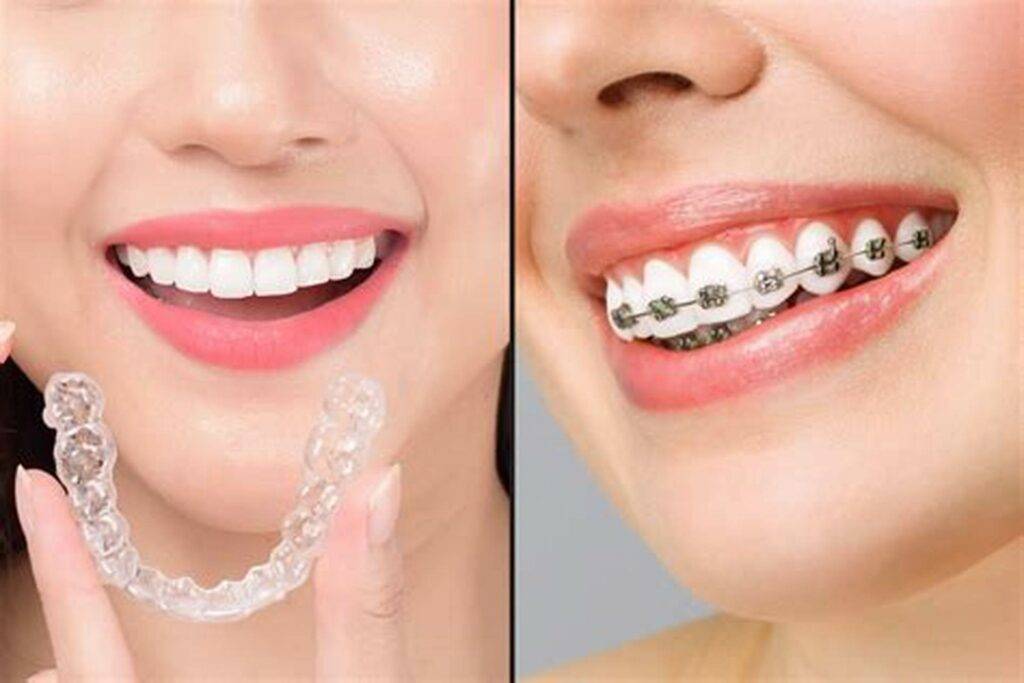
Clear aligners correct crowding the same way braces do — by applying continuous, controlled pressure that gradually moves teeth into a new position over time. The difference is in how that pressure is delivered.
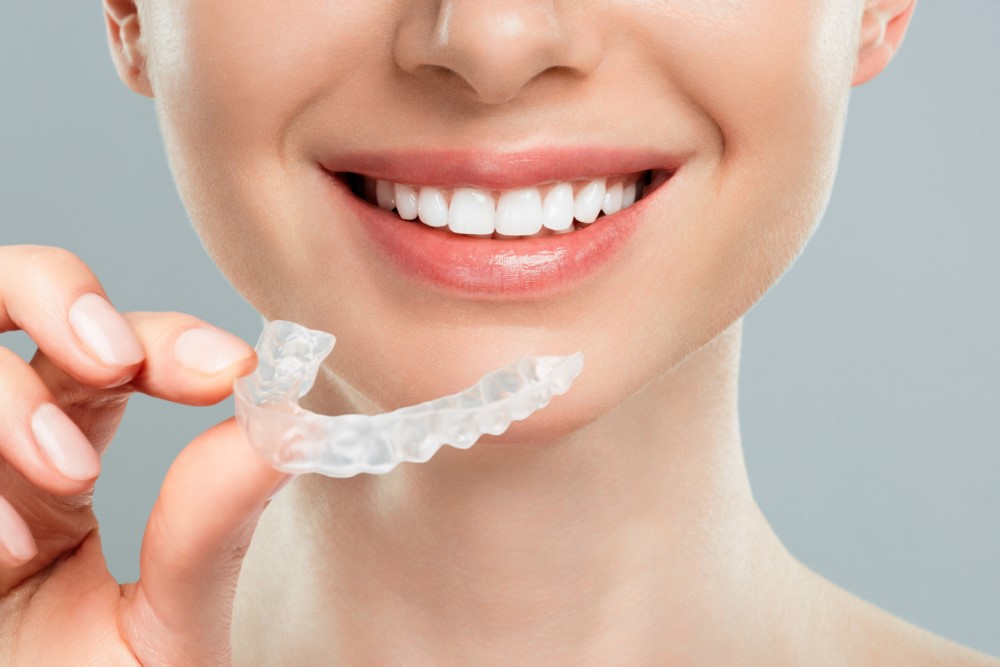
Each aligner in a series is a slightly different shape from the one before it. When you switch to a new tray every one to two weeks, it applies gentle pressure to nudge specific teeth a fraction of a millimetre further than the last tray did. Over a full series — which can range from 15 to 40+ trays depending on severity — these small, incremental movements add up to the full correction.
Before any aligners are made, your case is mapped out using a 3D digital scan. This allows the treatment to be simulated from start to finish, so both you and your orthodontist can see exactly how your teeth will move at every stage before treatment even begins. For crowding specifically, this often involves a combination of two movements:
Expansion
In many mild-to-moderate cases, the aligners gradually widen the arch slightly to create the missing space, allowing crowded teeth to move outward into proper alignment without needing to remove any tooth structure.
Interproximal Reduction (IPR)
For tighter cases, a small, painless amount of enamel is polished from between specific teeth to create extra space. This is done in fractions of a millimetre and does not affect tooth strength or sensitivity.
What to Expect During Treatment for Crowding
Aligner treatment for crowding follows a fairly predictable path from the first visit to the final result. Here is what that journey typically looks like at Dental Avenue & Facial Aesthetics.
Clinical Assessment & 3D Scan
A full examination, digital X-rays, and a 3D scan of your teeth to measure the exact severity and pattern of your crowding.
Digital Treatment Plan
Your orthodontist maps out the full tooth movement digitally, so you can preview your projected result before committing to treatment.
Receiving Your Aligners
Your custom aligner series is manufactured and issued in batches, typically a few trays at a time, with check-ins scheduled every 4 to 8 weeks.
Wearing & Switching Trays
Aligners are worn 20 to 22 hours a day and switched to the next tray every one to two weeks, exactly as planned in your digital schedule.
Progress Check-ins
Periodic visits confirm your teeth are tracking the plan correctly. Minor adjustments — known as refinements — are common and expected for crowding cases.
Retention
Once your teeth reach their final position, a retainer is fitted to hold the result in place while the surrounding bone stabilises.
For mild to moderate crowding, total treatment time generally falls between 6 and 18 months. More severe cases, or those requiring IPR and expansion together, can take longer — your written treatment plan will give you a specific estimate based on your scan.
The Health Benefits of Treating Crowding
Straightening crowded teeth is often thought of as a cosmetic decision, but the clinical benefits are just as significant — in many cases, more so.
Easier Cleaning
Overlapping teeth create tight spots that a toothbrush and floss cannot reach properly, allowing plaque to build up undisturbed. Straightened teeth are dramatically easier to clean.
Lower Decay & Gum Disease Risk
Because plaque accumulates in crowded areas, untreated crowding is linked to a higher rate of cavities and gum inflammation between overlapping teeth.
Reduced Abnormal Wear
Teeth that meet at odd angles due to crowding can wear unevenly against each other over the years, sometimes chipping or flattening prematurely.
Better Bite Function
Severe crowding can interfere with how the upper and lower teeth meet, contributing to jaw strain, clicking, or discomfort when chewing.
Improved Speech Clarity
In some cases, significant crowding affects tongue placement during speech. Correcting tooth position can improve clarity for certain sounds.
Long-Term Confidence
Patients consistently report that a straighter smile changes how comfortable they feel speaking, laughing, and being photographed in social and professional settings.
Can Crowding Come Back After Treatment?
Yes — without proper retention, crowding can gradually return. This is one of the most important things patients should understand before finishing treatment, because the work doesn’t end when the last aligner tray comes out.
Teeth are held in their new position by the surrounding bone and ligaments, which need time to stabilise after movement. Until that happens, teeth have a natural tendency to drift back toward their original position — a process called relapse. Other contributing factors include normal age-related shifting, tongue or lip habits, and inconsistent retainer wear.
Why Choose Dental Avenue & Facial Aesthetics for Crowding Treatment?
Crowding cases range from a single rotated tooth to complex, full-arch corrections — and getting the diagnosis right at the start makes the difference between a smooth treatment and a frustrating one. Here’s what to look for, and what we offer.
Specialist Diagnosis, Not Guesswork
Every case starts with a 3D scan and digital X-rays, not a visual estimate — so your treatment plan is based on your actual space deficit, not an assumption.
In-House Range of Solutions
Our Aligner Specialists and Orthodontists treat mild rotations through to severe, complex crowding under one roof — so you’re matched to the right treatment, not just the one the clinic happens to offer.
Transparent, Upfront Pricing
You receive a full written treatment plan with costs clearly laid out before any work begins. No hidden fees, no surprise additions mid-treatment.
10+ Years Treating Lahore Patients
A decade of experience treating crowding cases across DHA, Cantt, and Johar Town, with the latest in digital aligner technology.
If your teeth are crowded, the most useful next step is a proper clinical assessment — not another article. Dental Avenue & Facial Aesthetics offers a full consultation with a 3D scan and a written treatment plan, so you know exactly what your case needs and what it will cost before you decide anything.
Frequently Asked Questions
Can clear aligners fix severe crowding, or only mild cases?
Clear aligners are highly effective for mild to moderate crowding and have advanced enough to treat many moderate-to-complex cases as well. Severe crowding with significant skeletal involvement may require braces, or aligners combined with interproximal reduction or selective extraction. A clinical assessment will tell you which category your case falls into.
Will I need teeth removed to fix crowding with aligners?
Not in most cases. Mild to moderate crowding is usually resolved through gentle arch expansion and interproximal reduction — a painless, minimal removal of enamel between teeth — rather than extraction. Extraction is generally reserved for severe space deficits where expansion and IPR cannot create enough room safely.
How long does aligner treatment for crowding usually take?
Mild to moderate crowding typically takes 6 to 18 months. More severe cases, or those requiring a combination of expansion and IPR, can take longer. Your exact timeline is calculated from your 3D scan and provided in your written treatment plan.
Is crowding purely cosmetic, or does it actually affect oral health?
Crowding has real clinical consequences beyond appearance. Overlapping teeth are harder to clean properly, which increases the risk of cavities and gum disease in the crowded areas. Severe crowding can also affect bite function and cause uneven tooth wear over time.
What happens if I stop wearing my retainer after treatment?
Teeth have a natural tendency to drift back toward their original position until the surrounding bone fully stabilises — a process called relapse. Skipping retainer wear, especially in the first year, is the most common reason crowding returns after successful treatment. Consistent retainer use, as instructed by your orthodontist, prevents this.
Related Articles
Comparison
Aligners or Braces? A Decision Framework for Every Case Type
Invisible Clear Aligners in Pakistan: Cost, Process & Results
Inside Lahore’s Leading Dental Hospital: Our Story & Standards
Smile Makeovers in Lahore: Veneers, Whitening & Digital Design
Dental Avenue & Facial Aesthetics
Opposite Askari X, Near DHA Lahore Cantt
0325 044 5558 | dentalavenuehospital@gmail.com
Copyright © 2026 Dental Avenue & Facial Aesthetics