What Are the Causes of Bad Breath?
Bad breath can be embarrassing and affect your confidence in social situations. Whether you’re meeting clients in Lahore’s business district or spending time with family, fresh breath matters. Understanding the causes of bad breath is the first step toward solving this common problem. Moreover, identifying the root cause helps you choose the right treatment approach.
At Dental Avenue Hospital, we help Lahore residents tackle bad breath by addressing its underlying causes. Therefore, let’s explore what triggers this condition and how you can prevent it.
Understanding Halitosis
Halitosis causes range from simple lifestyle factors to serious medical conditions. Consequently, getting a proper diagnosis is essential. Most people experience bad breath occasionally, but persistent cases need professional attention. Furthermore, chronic bad breath can signal underlying health issues that require immediate care.
Common Dental Causes
Poor Oral Hygiene
Poor oral hygiene bad breath is the most prevalent cause. When you skip brushing or flossing, food particles remain in your mouth. Subsequently, bacteria break down these particles, releasing foul-smelling compounds. Additionally, neglecting your oral care routine allows harmful bacteria to multiply rapidly.
Plaque buildup bad breath occurs when sticky bacterial film accumulates on teeth. This film hardens into tartar if not removed promptly. As a result, the bacteria produce sulfur compounds that smell unpleasant. Regular dental cleanings at Dental Avenue Hospital can effectively remove this buildup.

Gum Disease and Tooth Problems
Gum disease and bad breath go hand in hand. Infected gums create pockets where bacteria thrive, producing strong odors. Similarly, tooth decay causing bad breath happens when cavities harbor bacteria deep within damaged teeth. Therefore, treating gum disease and cavities promptly prevents persistent bad breath.
Tongue Bacteria
Tongue bacteria bad breath is often overlooked. Your tongue’s rough surface traps bacteria, dead cells, and food debris. Consequently, a white or yellow coating develops, causing unpleasant odors. Cleaning your tongue daily with a scraper or brush eliminates these odor-causing bacteria.
Dry Mouth
Dry mouth bad breath develops when saliva production decreases. Saliva naturally cleanses your mouth and neutralizes acids. However, when your mouth lacks moisture, bacteria multiply faster. Additionally, certain medications, breathing through your mouth, or dehydration can cause dry mouth.
Medical Conditions Behind Bad Breath
Digestive System Issues
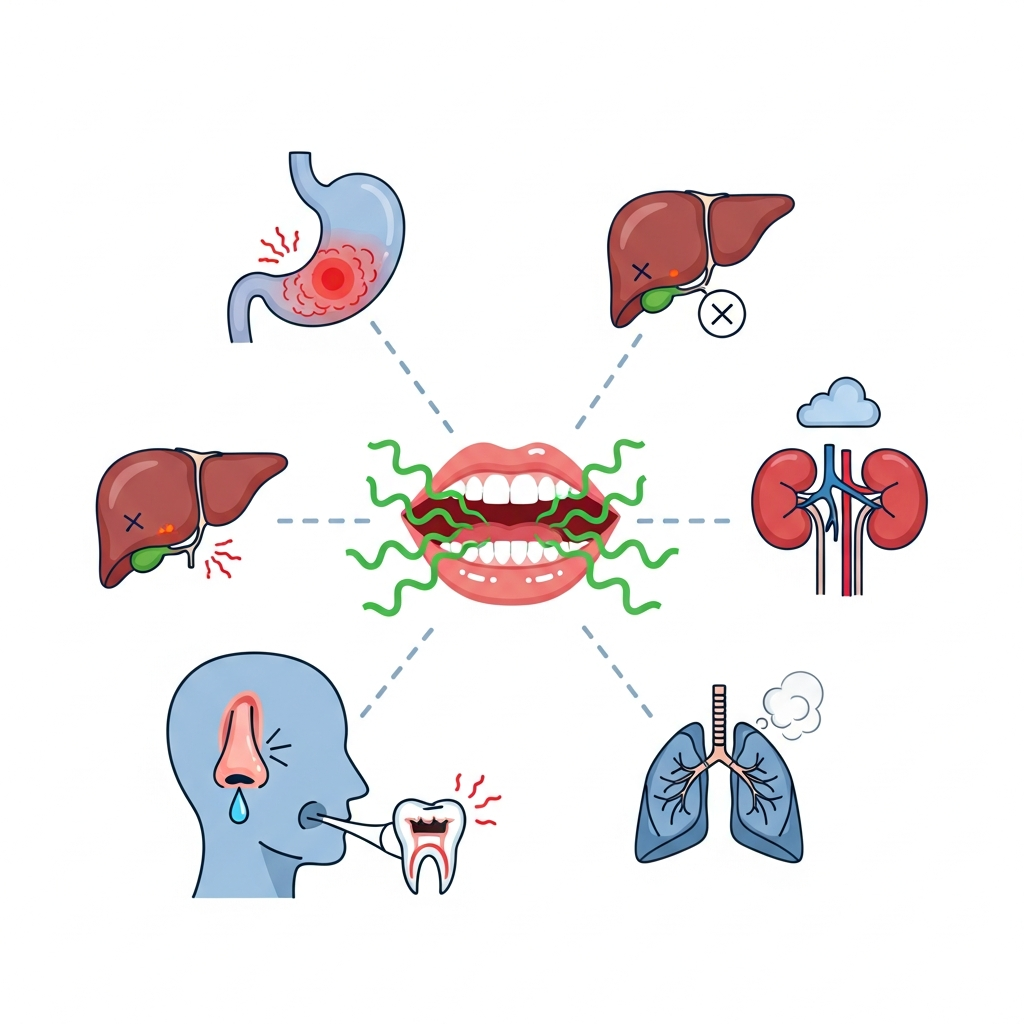
Stomach problems causing bad breath include various digestive disorders. Specifically, acid reflux bad breath occurs when stomach acid flows back into your esophagus. This creates a sour taste and odor. Furthermore, H. pylori infections and gastritis can also contribute to chronic bad breath.
Respiratory Infections
Sinus infection bad breath results from post-nasal drip and bacterial growth in your sinuses. The mucus draining down your throat carries bacteria that produce foul odors. Similarly, throat infections and bronchitis can cause temporary bad breath until the infection clears.
Tonsil Stones
Tonsil stones bad breath happens when debris calcifies in your tonsil crypts. These small, white formations smell extremely unpleasant. Moreover, they’re difficult to remove without proper technique. Many Lahore residents seek help at Dental Avenue Hospital for persistent tonsil stone problems.
Systemic Diseases
Diabetes bad breath can produce a fruity or acetone-like smell due to ketones in the breath. Additionally, liver disease bad breath creates a musty odor as toxins accumulate in the body. These serious conditions require immediate medical attention beyond dental care.
Lifestyle and Dietary Factors
Foods and Beverages
Certain food causing bad breath includes onions, garlic, and spicy dishes popular in Lahore’s cuisine. These foods enter your bloodstream and affect your breath until your body processes them. Meanwhile, coffee bad breath results from coffee’s acidity and its effect on saliva production.
Tobacco Use
Smoking and bad breath creates multiple problems. Tobacco dries your mouth, stains teeth, and damages gum tissue. Furthermore, it increases your risk of gum disease and oral cancer. Quitting smoking dramatically improves breath quality and overall oral health.
Dehydration and Fasting
Dehydration bad breath occurs when you don’t drink enough water, especially in Lahore’s hot climate. Your body needs adequate hydration to produce saliva. Similarly, fasting bad breath develops during Ramadan or other fasting periods when eating schedules change dramatically.
Treatment Approaches
Understanding bad breath causes and treatment helps you choose the right solution. First, maintain excellent oral hygiene by brushing twice daily and flossing regularly. Second, schedule regular checkups at Dental Avenue Hospital for professional cleanings. Third, address any underlying medical conditions with appropriate specialists.
Additionally, drink plenty of water throughout the day to keep your mouth moist. Use antibacterial mouthwash to reduce bacteria levels. Moreover, chew sugar-free gum to stimulate saliva production between meals.
When to Seek Professional Help
If home remedies don’t improve your breath within a few weeks, consult our dental experts. Persistent bad breath often indicates reasons for bad breath that require professional diagnosis. At Dental Avenue Hospital in Lahore, we conduct thorough examinations to identify the exact cause of your condition.
Our experienced team uses advanced diagnostic tools to detect cavities, gum disease, and other oral health issues. Subsequently, we create personalized treatment plans that address your specific needs.
Prevention Tips for Fresh Breath
Preventing bad breath is easier than treating it. Brush your teeth and tongue at least twice daily. Floss daily to remove food particles between teeth. Furthermore, replace your toothbrush every three months. Visit Dental Avenue Hospital every six months for professional cleanings and checkups.
Stay hydrated by drinking at least eight glasses of water daily. Limit what causes bad breath in your diet by reducing odorous foods before important events. Quit smoking and limit alcohol consumption to improve your oral health significantly.
Frequently Asked Questions
- What are the main causes of bad breath?
The primary causes of bad breath include poor oral hygiene, gum disease, tooth decay, dry mouth, and tongue bacteria. Additionally, medical conditions like sinus infections, acid reflux, and diabetes can contribute to chronic bad breath.
- Can stomach problems cause bad breath?
Yes, stomach problems can definitely cause bad breath. Acid reflux, H. pylori infections, and gastritis allow stomach acids and bacteria to create unpleasant odors. Treating these digestive issues often resolves the associated bad breath.
- How does poor oral hygiene lead to bad breath?
Poor oral hygiene allows bacteria to accumulate on teeth, gums, and tongue. These bacteria break down food particles and dead cells, producing sulfur compounds that smell unpleasant. Regular brushing, flossing, and professional cleanings prevent this buildup.
- Does drinking coffee cause bad breath?
Coffee can cause bad breath because it decreases saliva production and creates an acidic environment in your mouth. The compounds in coffee also stick to your tongue, contributing to odor. Drinking water after coffee helps minimize this effect.
- When should I visit a dentist for bad breath?
Visit a dentist if bad breath persists despite good oral hygiene, or if you notice bleeding gums, tooth pain, or other oral health issues. At Dental Avenue Hospital in Lahore, we can diagnose and treat the underlying causes of your bad breath effectively.