Root Canal Treatment in Pakistan: Step-by-Step Guide + Costs (2025)
Complete 2025 guide to root canal treatment in Pakistan — procedure steps, PKR costs, recovery, and finding the right specialist in Lahore.
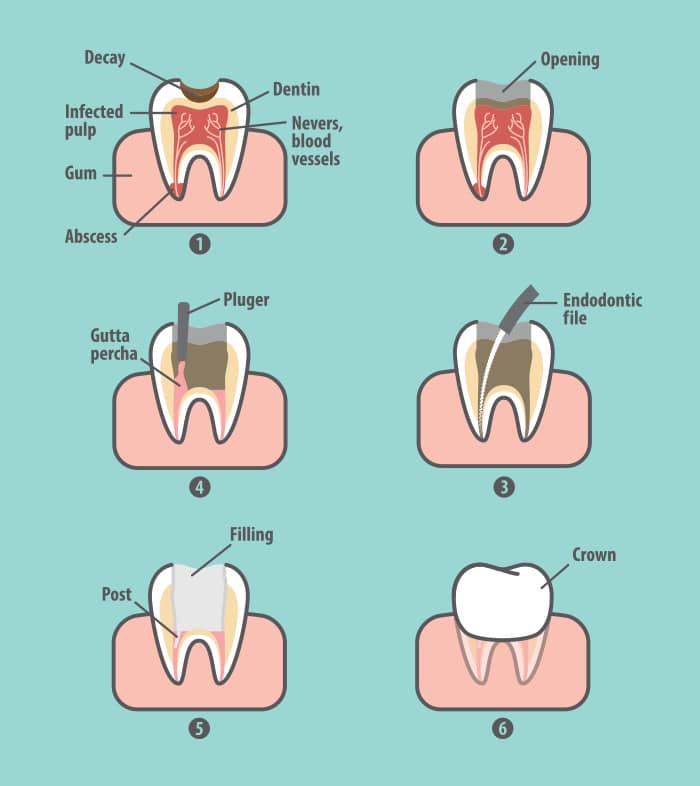
Root canal treatment in Pakistan involves removing infected dental pulp, cleaning and shaping the root canals, disinfecting with irrigating solutions, sealing with gutta-percha, and restoring with a crown — a six-step process that typically costs between PKR 8,000 and PKR 25,000 depending on tooth type, and is completed in one or two visits at a specialist clinic in Lahore.
Despite being one of the most commonly performed dental procedures in Pakistan, root canal treatment remains poorly understood by most patients. This creates unnecessary fear and, worse, delayed treatment that allows infections to spread to the jawbone, neighbouring teeth, and in severe cases, surrounding soft tissues. This guide explains the complete procedure — step by step — along with 2025 PKR cost ranges, recovery expectations, and what separates an excellent endodontist from an average general dentist in Pakistan.
Related reading: Root Canal Treatment at Dental Avenue | Crown & Bridge Lahore | Emergency Dental Pain
What Is Root Canal Treatment and How Does Infection Reach the Pulp?
A tooth has three layers: enamel (the hard outer shell), dentine (the middle layer), and the pulp — a soft inner chamber containing nerves, blood vessels, and connective tissue. During tooth development the pulp is essential. Once a tooth is fully formed, it can survive without the pulp — which is what makes root canal treatment possible.
Bacteria enter the pulp through deep cavities that breach the enamel and dentine, cracks from trauma or biting hard objects, failed or leaking fillings, or gum disease that exposes the root surface. Once bacteria colonise the pulp chamber, infection spreads down the root canals to the tip (apex) of the root, forming a periapical abscess — a pocket of pus in the surrounding bone.
According to Wikipedia’s overview of endodontic therapy, root canal treatment eliminates bacteria from the infected root canal system, prevents reinfection, and saves the natural tooth — outcomes that no antibiotic alone can achieve once pulp infection is established.
Who Needs Root Canal Treatment? 6 Clinical Indicators
Pakistani dentists assess the following clinical and radiographic signs before recommending root canal treatment. If you recognise two or more of these, book an urgent appointment rather than waiting for symptoms to worsen.
1. Spontaneous, Throbbing Pain
Pain that starts without a trigger, worsens at night, and is described as a deep, throbbing ache — classic pulpitis symptoms indicating live or necrotic inflamed tissue.
2. Prolonged Sensitivity to Temperature
Hot or cold drinks triggering pain that lingers beyond 30 seconds suggests irreversible pulpitis — a point of no return where the pulp cannot heal and must be removed.
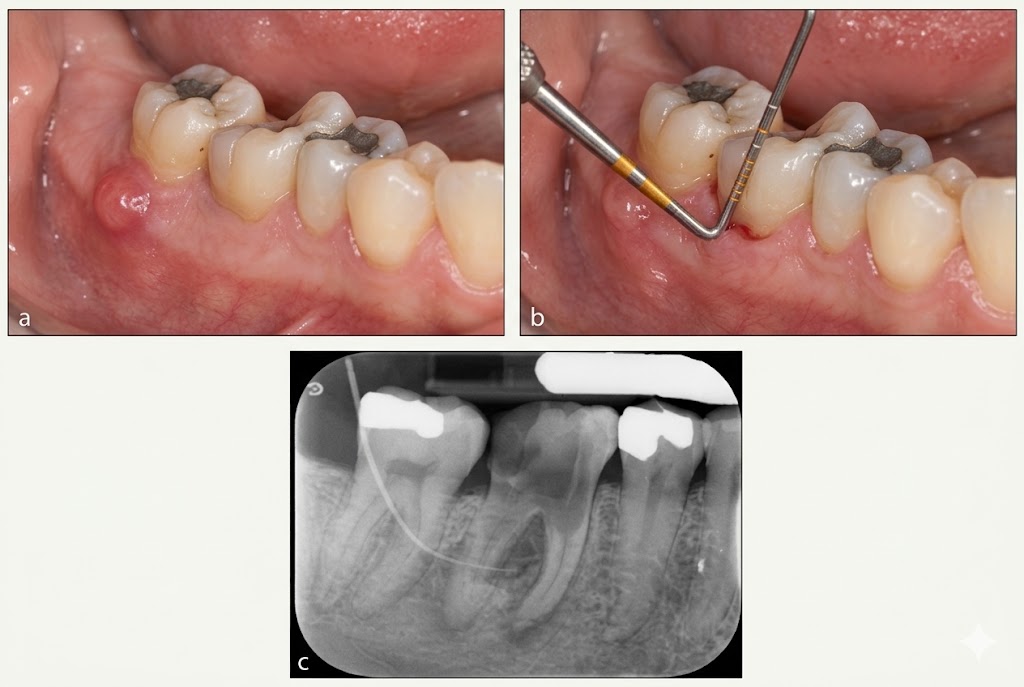
3. Periapical Abscess on X-Ray
A dark shadow at the root tip on a dental X-ray represents bone destruction caused by spreading infection — even if the patient currently feels no pain because the nerve has died.
4. Visible Gum Swelling or Sinus Tract
A “gum pimple” (parulis) or swelling beside a tooth is a draining abscess. It may temporarily relieve pressure but signals active infection requiring endodontic intervention.
5. Tooth Discolouration
A tooth darkening to grey or brown indicates internal haemorrhage or pulp necrosis. Discolouration from inside the tooth is almost always a sign that root canal treatment is needed.
6. Pain on Biting or Percussion
Tenderness when biting or when the dentist gently taps the tooth with an instrument indicates periapical periodontitis — infection spreading from the canal into the surrounding bone.
Root Canal Treatment Procedure — All 6 Steps Explained
As performed at Dental Avenue Hospital, Lahore, using rotary endodontic technology
Comprehensive X-Ray and Diagnosis
A high-resolution digital periapical X-ray is taken first to assess root length, canal curvature, number of canals, extent of infection, and surrounding bone levels. For complex molar anatomy or calcified canals, a 3D CBCT scan provides a complete three-dimensional map before any instrumentation. This diagnostic stage defines the entire treatment plan and prevents procedural surprises.
Local Anaesthesia, Rubber Dam Isolation, and Access Cavity
Topical anaesthetic gel is applied to the gum for two minutes before the injection — making the needle essentially painless for most patients. After the area is fully numb, a rubber dam (latex sheet) is stretched around the tooth to isolate it from saliva and oral bacteria throughout the procedure. The endodontist then creates an access cavity through the top of the tooth to reach the pulp chamber beneath.
Pulp Removal and Canal Shaping with Rotary Files
Infected pulp tissue is removed using fine endodontic files. The canals are then shaped using rotary nickel-titanium instruments — motor-driven files that rotate at controlled speed and torque, following the natural curvature of each canal without the risk of ledging, perforation, or transportation that manual files carry. An apex locator measures canal length electronically throughout, ensuring precise working length every time.
Irrigation, Disinfection, and Calcium Hydroxide Dressing
Between each filing instrument, the canals are flushed with sodium hypochlorite (a powerful antimicrobial) and EDTA (to remove the smear layer and open dentinal tubules for deeper disinfection). In cases with active infection, a calcium hydroxide paste is placed inside the canals as an inter-appointment dressing — it maintains a high-pH environment that kills residual bacteria over 1–2 weeks before the final fill is placed.
Gutta-Percha Obturation and Coronal Sealing
Once the canals are confirmed clean, dry, and free of symptoms, they are obturated (filled) with gutta-percha — a rubber-like, biocompatible material — combined with a root canal sealer. The gutta-percha cones are compacted to fill the entire canal space three-dimensionally, eliminating any voids where bacteria could recolonise. A coronal seal (temporary or permanent) is then placed to close the access cavity.
Final Restoration with Crown or Composite Filling
Root canal treated teeth lose moisture and become brittle without the vascular pulp tissue. A dental crown is essential for all molars and premolars — and strongly recommended for front teeth — to protect against fracture under chewing forces. At Dental Avenue, patients can choose from zirconia, emax, or porcelain-fused-to-metal crowns. The crown is typically fitted 1–2 weeks after the final RCT appointment.
🔬 What Dental Avenue Uses vs What to Avoid
Dental Avenue uses rotary nickel-titanium files, electronic apex locators, digital X-rays, sodium hypochlorite irrigation, and bioceramic or AH Plus sealers — all evidence-based gold standards. Avoid any clinic in Pakistan still using stainless steel hand files only, older zinc oxide eugenol sealers for complex cases, or no rubber dam isolation. These are indicators of outdated technique that compromise outcomes.
Root Canal Treatment Cost in Pakistan 2025 — City-by-City PKR Ranges
RCT costs vary significantly across Pakistan based on the city, clinic type, treating dentist’s qualifications, and tooth complexity. The ranges below reflect 2025 private clinic pricing for specialist-performed treatment.
| City | Front Tooth (PKR) | Premolar (PKR) | Molar (PKR) |
|---|---|---|---|
| Lahore (specialist clinic) | 8,000–12,000 | 10,000–18,000 | 15,000–25,000 |
| Karachi (specialist clinic) | 10,000–15,000 | 12,000–20,000 | 18,000–30,000 |
| Islamabad (specialist clinic) | 10,000–16,000 | 14,000–22,000 | 18,000–28,000 |
| Government hospital (any city) | 1,000–3,000 | 2,000–4,000 | 3,000–6,000 |
Crown costs (PKR 12,000–40,000) are in addition to the above RCT fees. All Dental Avenue prices are confirmed in writing before treatment begins.
Cost Variables That Affect Your Final Price
- ▸
Tooth type and canal number — front teeth have 1 canal; molars have 3–4. Each canal adds procedure time and material cost.
- ▸
Canal complexity — calcified, curved, or C-shaped canals require more time, specialist skill, and in some cases CBCT imaging — which adds to cost.
- ▸
Number of visits required — active infections needing calcium hydroxide dressings require two appointments. Single-sitting cases cost less overall.
- ▸
Sealer material — bioceramic sealers (superior biocompatibility and seal quality) cost more than conventional zinc oxide eugenol alternatives.
- ▸
Crown material selected — zirconia crowns offer superior aesthetics and strength and cost more than PFM options. For back teeth under heavy chewing forces, zirconia is generally recommended.
Single-Sitting vs Two-Visit Root Canal in Pakistan — Which Is Better?
Both approaches are clinically valid — the right choice depends on the clinical presentation of your tooth, not patient preference or time constraints.
| Factor | Single-Sitting RCT | Two-Visit RCT |
|---|---|---|
| Active abscess present | Not recommended | Preferred |
| Necrotic (dead) pulp, no symptoms | Suitable | Optional |
| Complex canal anatomy | Case by case | Often preferred |
| Post-op discomfort levels | Comparable | Comparable |
Research published by the National Institutes of Health on endodontic treatment outcomes confirms that both single and multi-visit approaches achieve comparable long-term success rates when performed by qualified specialists with proper technique — the clinical presentation, not appointment count, determines outcomes.
Root Canal Recovery in Pakistan — Day-by-Day Timeline
Recovery from root canal treatment in Pakistan typically follows a predictable pattern. Understanding what is normal — and what is not — prevents unnecessary anxiety and helps you identify the rare complications that require a return visit.
Mild to moderate soreness around the treated tooth is normal and expected. Over-the-counter paracetamol or ibuprofen (Brufen) manages this comfortably. Avoid biting on the treated side. Eat soft foods — khichdi, yoghurt, dal, mashed vegetables. The anaesthetic wears off within 2–4 hours; do not eat until full sensation returns to avoid biting your cheek.
Soreness reduces noticeably. Most patients return to normal work and activities by day 3. Mild sensitivity when biting is still expected and normal. Continue salt water rinses twice daily. If you had an abscess drained, mild swelling at the site may persist — this is the healing response, not re-infection.
The tooth should feel largely normal. Any remaining temporary sensitivity to biting resolves as the periapical inflammation heals. This is the period to arrange your crown appointment — do not delay. Teeth without crowns at this stage are at risk of fracture under normal chewing forces.
Return to Dental Avenue immediately if: pain is worsening rather than improving after day 3, you develop facial swelling or fever, the temporary filling falls out, or you notice a bad taste or smell suggesting the tooth is draining. These are signs the case needs reassessment — not causes for panic, but always requiring prompt attention.
🤰 Root Canal Treatment for Pregnant Women in Pakistan
Root canal treatment is safe during pregnancy when clinically necessary. The second trimester (weeks 14–28) is the ideal window. Local anaesthetics safe for pregnancy are used. Digital X-rays with lead apron shielding expose the baby to negligible radiation. Delaying an infected tooth is riskier — untreated dental infections can trigger systemic inflammatory responses with potential obstetric consequences. Always inform your Dental Avenue endodontist that you are pregnant before treatment begins so appropriate modifications are made.
Insurance and Payment Plans for Root Canal Treatment in Pakistan
Health insurance coverage for dental procedures in Pakistan varies widely by policy type and insurer. Most corporate health insurance plans in Pakistan cover medically necessary dental treatment — which includes root canal treatment for infected teeth — up to a defined annual limit. Check your insurance policy documents or call your HR department to confirm dental coverage before your appointment.
If you are uninsured or your coverage does not extend to dental care, Dental Avenue can discuss structured payment options for treatment courses involving multiple appointments or higher-cost procedures such as implants combined with RCT. Speak to the patient coordinator at your consultation.
For overseas Pakistanis visiting Lahore, root canal treatment with a high-quality zirconia crown at Dental Avenue typically costs a fraction of equivalent treatment in the UK, UAE, or USA — making a dental visit home financially worthwhile for multiple procedures during a single trip. See Dental Avenue’s dental tourism page for more information.
Root Canal Treatment at Dental Avenue — Why Pakistan’s Patients Choose Us
Frequently Asked Questions — Root Canal Treatment in Pakistan
How many visits does root canal treatment take in Pakistan?
Most straightforward root canals at Dental Avenue are completed in one or two appointments. A single visit is appropriate when there is no active abscess and canals are uncomplicated. Two visits are used when an infection requires a calcium hydroxide dressing between appointments. Complex molar cases may occasionally require three visits.
What is the root canal success rate in Pakistan?
When performed by a qualified specialist using rotary instrumentation, proper irrigation, and followed by a crown, root canal treatment achieves 85–95% success over 10 years. The most common cause of failure in Pakistan is delayed or absent crown placement — which leaves the tooth vulnerable to fracture and recontamination. Always complete the crown stage promptly.
Can children have root canal treatment in Pakistan?
Yes. Children’s root canal treatment uses age-appropriate techniques — pulpotomy (partial pulp removal) or pulpectomy (full pulp removal) for baby teeth. Dental Avenue’s paediatric dental unit performs both procedures. Saving baby teeth until their natural shedding time is important for jaw development, speech, and maintaining space for permanent teeth.
What foods should I avoid after root canal treatment in Pakistan?
For the first 48 hours: avoid hard foods (nuts, crispy roti, raw vegetables), sticky foods (toffee, chewing gum), and very hot or cold items. Suitable Pakistani foods during recovery include dahi, khichdi, soft sabzi, and porridge. Avoid chewing on the treated side entirely until your permanent crown is fitted.
Is root canal treatment available during Ramadan in Pakistan?
Yes — root canal treatment during Ramadan is permissible and safe. Local anaesthetic injections do not break the fast according to most Islamic scholarly opinion, as nothing is ingested. Post-treatment oral rinses should be performed carefully to avoid swallowing. Dental Avenue’s team is experienced in accommodating fasting patients and can schedule appointments after Iftar for those who prefer it.
How do I book a root canal appointment at Dental Avenue Lahore?
Call 0333 060 6601 or WhatsApp us to book your consultation. Emergency cases with acute pain or facial swelling are seen the same day. Bring any previous dental X-rays and a list of current medications to your first appointment. A written treatment plan and cost estimate is provided before any clinical work begins.
Book Your Root Canal Consultation in Lahore
FCPS Endodontists | Rotary NiTi Technology | Digital X-Rays | PKR 8,000 Starting | Same-Day Emergency